Christian News 'Round the World




Recent excavations at the Church of the Holy Sepulchre in Jerusalem have yielded evidence of an ancient garden, supporting the biblical account of a garden near the site where Jesus was crucified. Archaeologists discovered seeds and pollen from olive trees and grapevines, dating back roughly 2,000 years. This discovery aligns with the New Testament verse John 19:41, which mentions a garden and a tomb near the place of crucifixion.
Elaboration:
https://nypost.com/2024/12/16/science/ancient-inscription-is-new-evidence-of-early-christianity/
The "Frankfurt Silver Inscription" refers to an 18-line Latin inscription discovered on a piece of silver foil within a protective amulet found in a Roman cemetery near Frankfurt, Germany. This amulet, which dates back to the mid-3rd century AD, is believed to be the oldest known evidence of Christianity north of the Alps. The inscription contains phrases such as "Holy, holy, holy!" and invocations of Jesus Christ and Saint Titus, demonstrating early Christian beliefs and practices.
Amulet and Discovery: The amulet, which is believed to have been worn around the neck as a form of protection, was found during archaeological excavations in 2018 at the "Heilmannstrasse" cemetery, located near the former Roman town of Nida.
Inscription Content: The Latin inscription, deciphered through advanced imaging technology, includes:
Significance:
https://www.icr.org/article/has-archaeological-evidence-for-jesus-been-discove
https://www.dailymail.co.uk/sciencetech/article-14105531/Archaeology-evidence-Jesus-left-behind.html
Flavius Josephus was a Jewish historian who wrote about 60 years after Jesus' death. In his history of the Jewish people he mentions 'the brother of Jesus-who-is-called-Messiah, James by name'
In his Antiquities of the Jews, Josephus mentions "James, the brother of Jesus, who was called Christ," stating that he was killed by the High Priest Ananus after the death of the procurator Festus but before the arrival of Albinus.
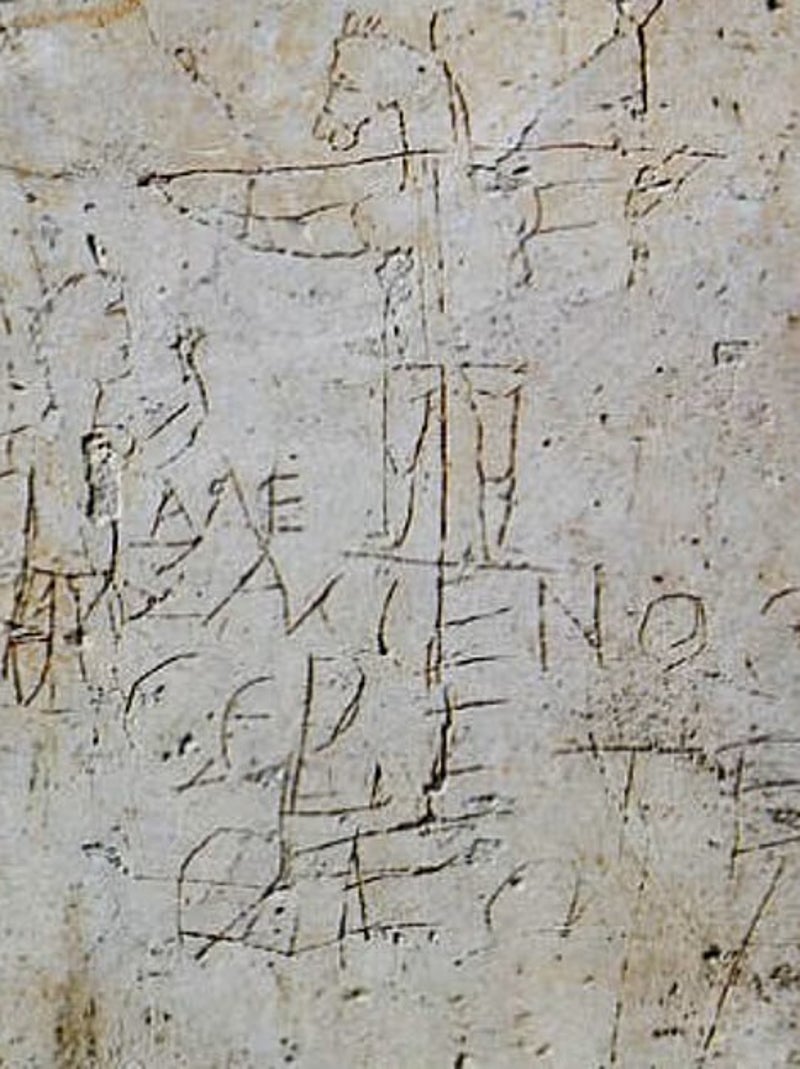
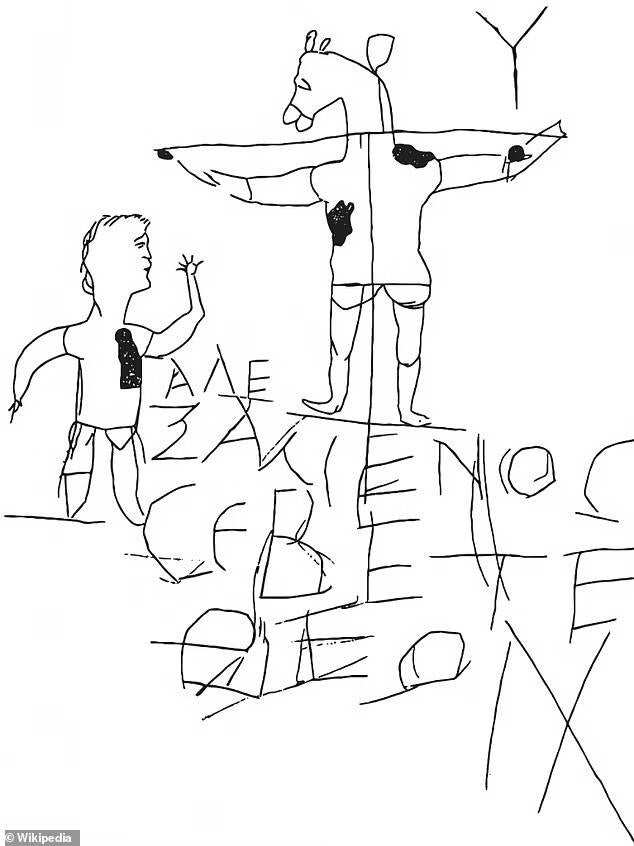
This crude graffiti carved into a wall of the Palatine Hill in Rome is possibly the first depiction of Christians anywhere in the world.
The Alexamenos Graffito, one of the earliest depictions of Jesus, is a Roman graffiti found in Rome. It depicts Jesus on a cross with a donkey's head, with the inscription "Alexamenos worships his God." The graffiti is interpreted as a mockery of Christians and their belief in a crucified God, particularly targeting the Christian depiction of Jesus as the divine son of God.
The crucified heel of a man named Jehohanan was found in a tomb in Israel. This proves that Jesus could have received a proper burial as the Gospel claims rather than being thrown into a mass burial pit for criminals
The "Jehohanan crucified heel" refers to the discovery of a first-century ossuary (bone box) in Jerusalem containing the skeletal remains of a man named Jehohanan, with a nail embedded in his right heel bone. This discovery is significant because it provides physical evidence of Roman Crucifixion, a common method of execution used by the Romans.
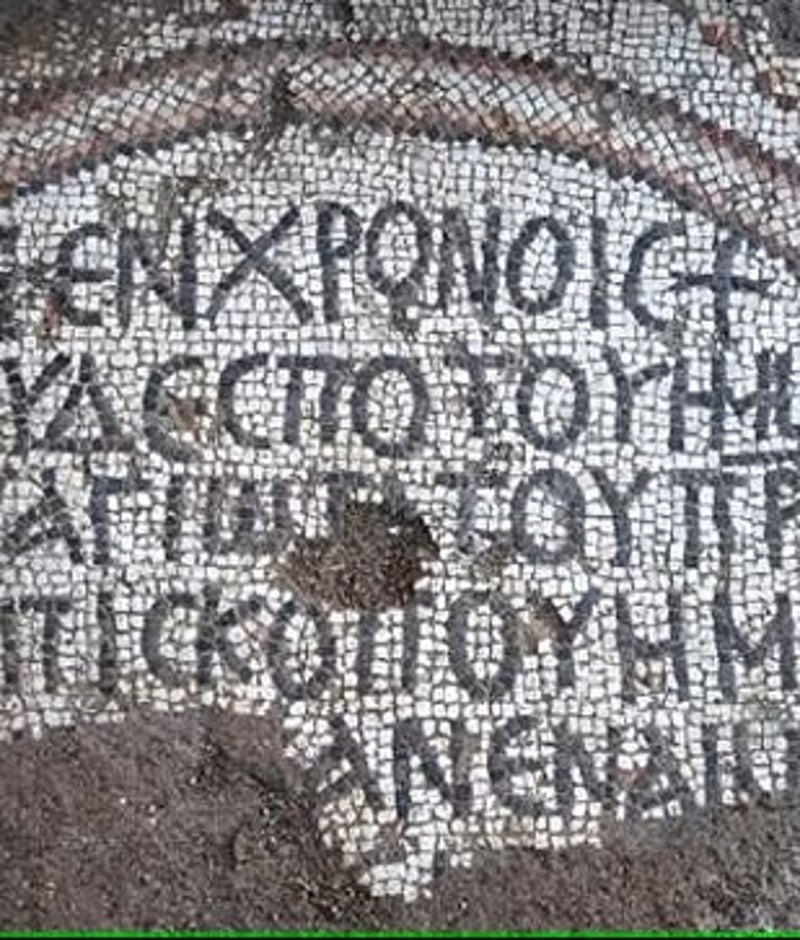
This mosaic was found in a basilica believed to be the Church of the Apostles, built above the homes of Peter, Andrew, and Phillip. However, how much evidence this provides for the existence of the historical Jesus is debated.
The mosaic found in the basilica at the "Church of the Apostles" is a Byzantine mosaic floor with inscriptions, including a dedicatory text and a petition for intercession by Saint Peter. The mosaic also features a donor named "Constantine, the servant of Christ" and a description of Peter as "chief and commander of the heavenly apostles". These inscriptions are considered strong evidence that the site may be the lost "Church of the Apostles" in biblical Bethsaida.
Inscriptions:
Significance:
The mosaic inscriptions, especially the reference to Peter, are considered strong evidence that the site is indeed the "Church of the Apostles" and may also be the location of biblical Bethsaida.
This 1,800-year-old mosaic contains the ancient Greek phrase: 'The god-loving Akeptous has offered the table to God Jesus Christ as a memorial.' This is the first recorded mention of the divinity of Christ.
The Megiddo Mosaic is an ancient, early Christian mosaic discovered beneath the floor of a former prison in Megiddo, Israel. It's considered one of the earliest known archaeological proofs that Jesus Christ was divine, dating back to AD 230. The mosaic, found in the ruins of a Christian prayer hall, features inscriptions, including a dedication to God Jesus Christ, and images of fish, a symbol of early Christianity.
The James Ossuary is a box believed to contain the remains of James, the brother of Jesus. However, the box's veracity has been a matter of fierce debate and even legal action
The James Ossuary is a stone box, or ossuary, found in Israel, which was believed to contain the bones of James, the brother of Jesus, according to an Aramaic inscription on the box. The inscription reads "James, son of Joseph, brother of Jesus". The ossuary's authenticity and the inscription's claim of connection to Jesus' family have been the subject of much debate and controversy.
The original owner of the James Ossuary was charged with forgery. Although he was later acquitted some experts still question the suspicious circumstances in which the artefact came to light.
The ossuary was allegedly acquired by an Israeli businessman named Oded Golan from an unknown antique dealer in the 1970s.
However, in an unusual move, the Israel Antiquities Authority (IAA) accused Mr Golan of faking the relic and took him to court in the 'the forgery trial of the century'.
Experts from the IAA alleged that Mr Golan had taken a real first-century ossuary and added the inscription himself.
When police took Mr Golan into custody they did indeed find a forgery lab filled with tools and half-finished 'antiquities'.
But, in another twist, Mr Golan was then acquitted of all charges of forgery in 2012 on the grounds that the IAA had not proven the inscription was fake.
During the trial, it emerged that some of the IAA's experts didn't have the proper specialisms to properly appraise whether or not the writing was real.
For many, this vindicated the James Ossuary as a brilliant piece of evidence for the historicity of Jesus.
https://www.foxnews.com/world/easter-fears-christians-nigeria-being-wiped-out-muslim-extremists